Through mangrove restoration, community participation and engagement with traditional and religious leaders, the Nigerian Conservation Foundation is advancing a more inclusive approach to protecting the Niger Delta’s coastal ecosystems and the livelihoods they sustain.
Along the coast of the Niger Delta, mangroves are more than trees growing between land and water. They provide breeding and feeding grounds for fish and other aquatic species, help protect vulnerable shorelines, store carbon and sustain the livelihoods of communities whose lives are closely connected to coastal ecosystems.
Yet these vital ecosystems face mounting pressure from oil pollution, deforestation, unsustainable resource use and the spread of invasive Nypa palm. As mangroves degrade, the consequences extend beyond the loss of vegetation. Fish habitats are affected, coastal protection is weakened and the natural resources that support local livelihoods become increasingly vulnerable.
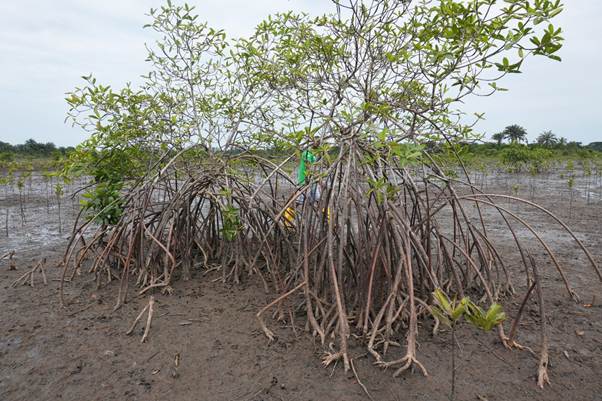
For communities that depend on fishing and other coastal activities, protecting mangroves is therefore inseparable from protecting their livelihoods and future. Addressing this challenge requires more than planting trees. It calls for sustained restoration efforts, community participation and stronger local commitment to environmental stewardship.
Through its Catalyzing Local Action for Climate Justice in Nigeria project, the Nigerian Conservation Foundation (NCF), with support from the Ford Foundation, is working with coastal communities to advance this integrated approach to mangrove conservation and climate resilience.
Bringing Degraded Mangrove Landscapes Back to Life
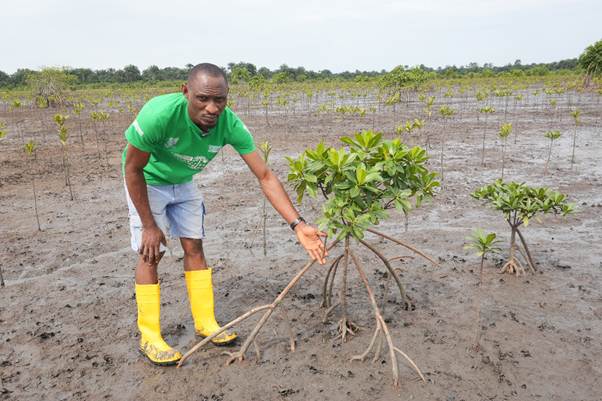
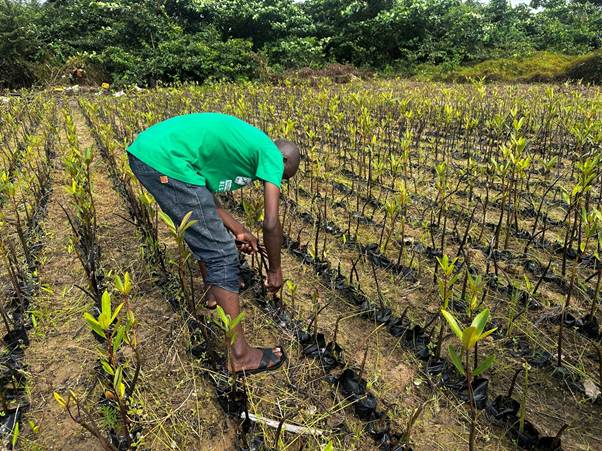
A central component of the project is the restoration of degraded mangrove areas in Rivers and Bayelsa States. Across Bodo/Baa in Rivers State and Akassa/Curlew Island in Bayelsa State, the project supported the restoration of approximately 23 hectares of mangrove habitat, with 80,000 mangrove planting units deployed.
In Bodo/Baa, Rivers State, eight hectares were targeted for restoration, supported by 40,000 mangrove planting units. The intervention also involved the removal of invasive Nypa palm, which competes with native mangrove vegetation and poses a threat to the ecological balance of coastal wetlands.
In Akassa/Curlew Island, Bayelsa State, a further 15 hectares were supported with 40,000 mangrove propagules, with 80 community members engaged in the restoration effort in collaboration with Safe Earth Foundation.
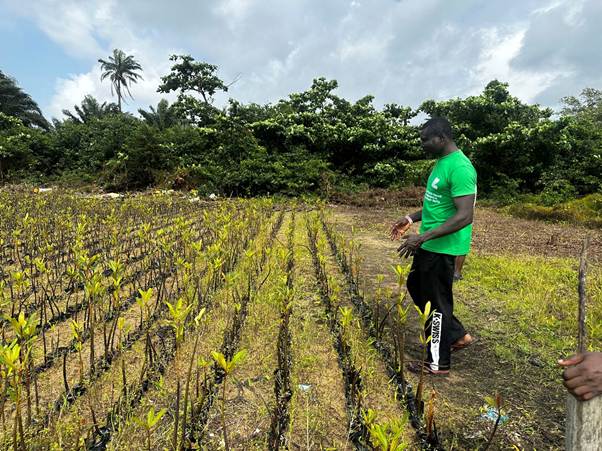
These interventions respond to the need to recover degraded habitats while involving the people who live closest to them. Community participation is particularly important in coastal restoration, where local knowledge of tides, waterways, vegetation and resource use can contribute to more effective implementation and monitoring.
When Communities Begin to See the Change
For Christian Tombarikpene of Bodo community, the restoration work carries particular meaning because he remembers the condition of the landscape before the intervention. He recalls how severely the area had been affected by oil pollution and how little mangrove vegetation remained when the NCF team first visited. He was involved in taking the team to the community’s traditional leadership and identifying a potential restoration site.
Since the work began in 2025, he says, the community has observed encouraging signs of progress. “Because of the oil spill, this whole area was badly affected. When you came here before, there were no mangroves. We started the restoration in 2025, and today, there is valuable progress. The mangroves have germinated, and the people are happy.”
He also describes seeing people harvesting periwinkles around the area, an observation that has encouraged community members as restoration continues.
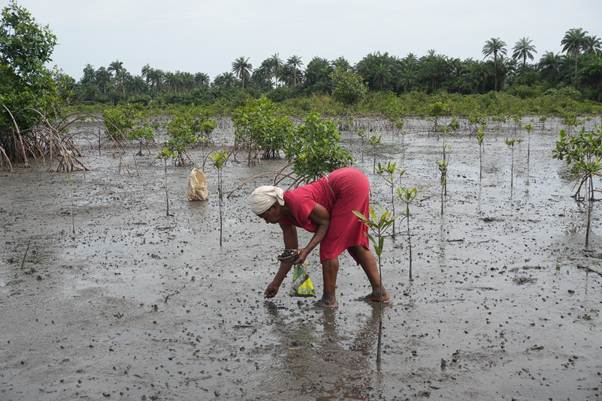
For people whose livelihoods depend on coastal resources, such observations help make the value of restoration tangible. They connect the work of planting and caring for mangroves to the wider ecosystem and the resources communities depend on.
While the early signs are encouraging, mangrove restoration requires continued attention, monitoring and protection to ensure that planted areas become established and can contribute to long-term ecosystem recovery.
Taking Environmental Stewardship Beyond the Restoration Sites
Restoring mangroves also requires changing how people relate to the ecosystems around them. Planting efforts can make important contributions, but their long-term value depends partly on whether communities recognise the importance of protecting these habitats and adopt practices that support their conservation. This is where traditional and religious institutions have an important role to play.
In Ogulagha, Delta State, NCF convened a Faith and Traditional Leaders Dialogue on Mangrove Governance, bringing together 20 leaders to discuss environmental stewardship and the role of community institutions in protecting mangroves.
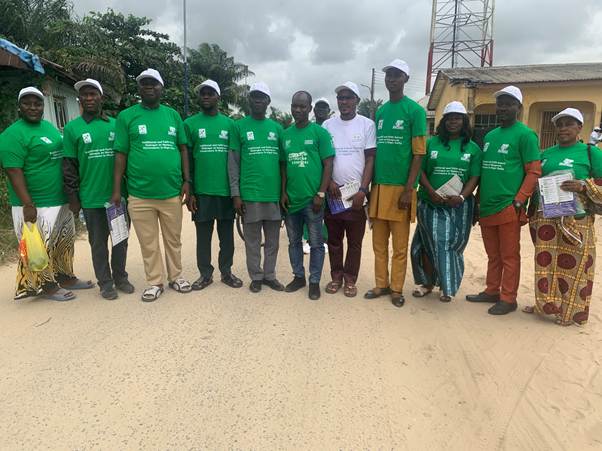
The engagement recognised the influence that traditional authorities and religious leaders hold within their communities. Through their established relationships and platforms, these leaders can help translate environmental messages into values, responsibilities and everyday practices.
For religious leaders, this means taking conversations about environmental protection beyond formal meetings and into places of worship, where messages can reach congregations and influence how people understand their responsibilities towards the natural environment.
Pastor Morpheus Membelanje describes how the engagement encouraged pastors to carry the message into their churches. “The message was taken by the pastors to every altar in the community, so people could understand the importance of mangroves to our environment. Before now, people littered our water bodies with plastic waste. But after the engagement, a new orientation was given to the people. The rate at which people now pollute the water bodies has reduced.”
He points to the presence of more than 30 churches in the area as an indication of the potential reach of faith-based environmental advocacy.
Revd John Ofunama, Coordinator of the Delta Riverine Zone of the Church of God Mission, also speaks to the importance of extending the message through religious institutions. “NCF came to our community and presented their work. The message was taken to the churches, and a lot of activities are going on. The work is effective and making progress in this area.”
Their accounts illustrate how environmental awareness can extend beyond conservation organisations and formal project activities. When religious and traditional leaders become part of the conversation, they can help make environmental stewardship a shared community concern.
The approach is particularly relevant to mangrove governance, where protecting coastal ecosystems requires collective responsibility and sustained attention to the activities taking place around them.
Building Local Ownership for Lasting Conservation
The restoration of mangroves is a long-term undertaking. Beyond the initial planting, degraded areas require continued monitoring, protection and community engagement to support the survival and growth of restored vegetation. This makes community ownership central to the sustainability of restoration efforts.
Through the climate justice project, NCF has worked to strengthen community participation and establish local structures that support environmental action. Site Support Groups provide a platform for community members, including traditional leaders, women and young people, to participate in conservation activities, monitoring and engagement.
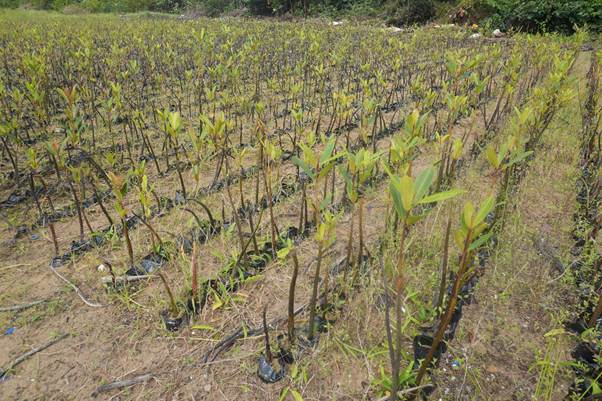
These structures are important because they help connect project interventions with the people who will continue to interact with and depend on the ecosystems long after individual activities have been completed.
The engagement of traditional and religious leaders adds another dimension to this approach. While community groups can support practical conservation activities, established local institutions can help reinforce the values and social commitment that make environmental protection a shared responsibility.
Together, these efforts recognise that successful restoration depends not only on what is planted, but also on the relationships, knowledge and local commitment that support its survival.