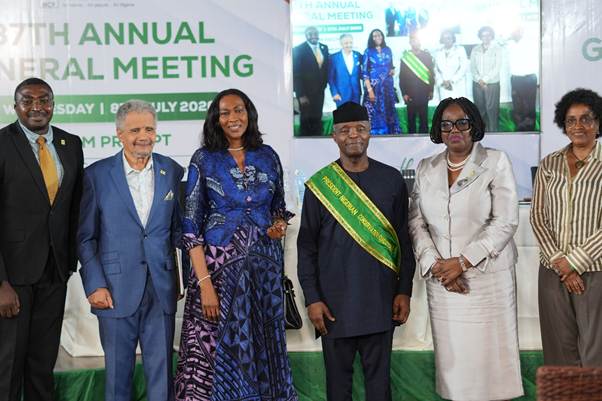
The Nigerian Conservation Foundation (NCF) has entered a defining new chapter in its nearly four decades of conservation leadership with the appointment of Professor Yemi Osinbajo, SAN, GCON, as President of its Board of Trustees, succeeding elder statesman and conservation champion Chief Philip Asiodu, CFR, CON, who stepped down after more than 25 years of distinguished service.
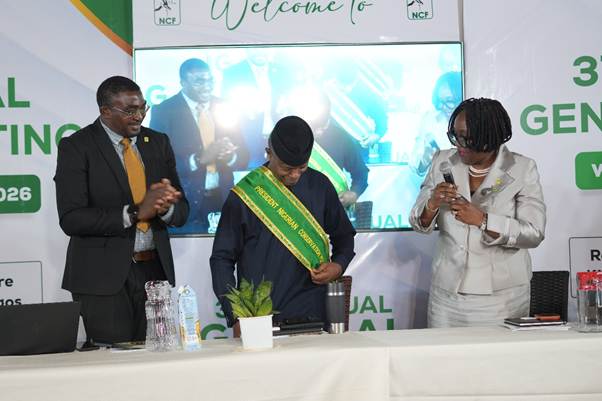
The announcement was made during the Foundation’s 37th Annual General Meeting (AGM) held at the Lekki Conservation Centre, Lagos, where members, partners, government representatives, development agencies, corporate organisations, civil society, and friends of conservation gathered to reflect on the Foundation’s stewardship over the past year and chart the course for its future.
Far more than a statutory meeting, the AGM served as a moment of accountability, institutional reflection, and renewal highlighting measurable conservation impact, celebrating enduring partnerships, and ushering in a new era of leadership for one of Africa’s foremost conservation organisations.
Reflecting on a Year of Measurable Impact
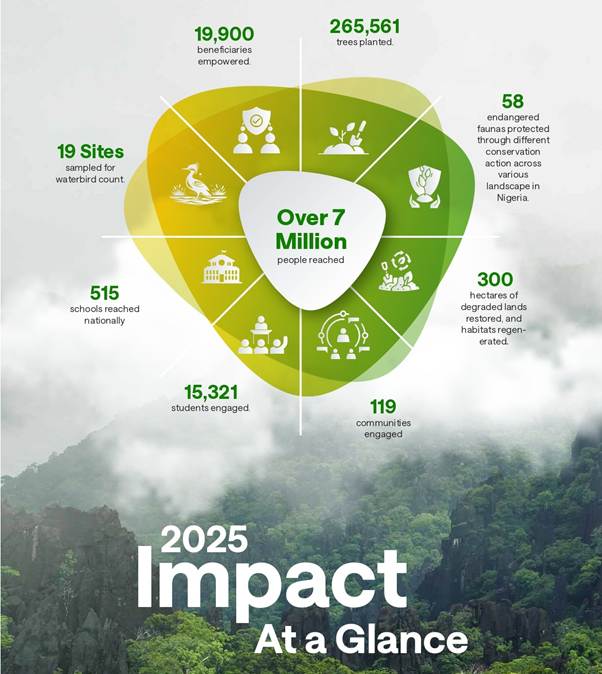
Presenting the Foundation’s 2025 performance, NCF showcased another year of tangible environmental and community impact across Nigeria’s diverse ecological landscapes.
During the year under review, the Foundation empowered 19,900 beneficiaries, planted 265,561 indigenous trees, restored 300 hectares of degraded landscapes, engaged 119 communities, reached 515 schools, and directly inspired 15,321 students through environmental education initiatives. Conservation actions also contributed to the protection of 58 endangered faunal species across multiple landscapes, reinforcing NCF’s commitment to safeguarding Nigeria’s biodiversity.
Beyond these numbers lies a broader story of restored ecosystems, strengthened livelihoods, informed public policy, empowered young people, and communities taking greater ownership of conservation efforts. Through programmes spanning climate action, biodiversity conservation, pollution management, environmental education, and policy advocacy, the Foundation continued to demonstrate that conservation delivers lasting benefits when science, communities, and partnerships work together.
Celebrating a Legacy of Service
One of the defining moments of the Annual General Meeting was the celebration of Chief Philip Asiodu’s remarkable stewardship as President of the Board of Trustees.
Having served the Foundation in various capacities since its establishment, Chief Asiodu’s leadership has been instrumental in shaping NCF into one of Africa’s most respected conservation institutions. Over more than two decades as President of the Board of Trustees, he championed forest restoration, biodiversity conservation, environmental policy, and strategic partnerships while helping strengthen the Foundation’s institutional credibility and national influence.
Addressing members during his farewell remarks, Chief Asiodu reflected on the Foundation’s journey from its formative years to becoming a leading voice for environmental sustainability in Nigeria. While acknowledging the progress made, he reiterated the urgent need to accelerate efforts to restore Nigeria’s forests through initiatives such as the Green Recovery Nigeria Programme, calling for bolder action toward achieving the nation’s long-term forest restoration ambitions.
He also expressed confidence in the Foundation’s future, noting that the structures established, the partnerships cultivated, and the renewed strategic direction position NCF to achieve even greater impact in the years ahead.
Welcoming Professor Yemi Osinbajo
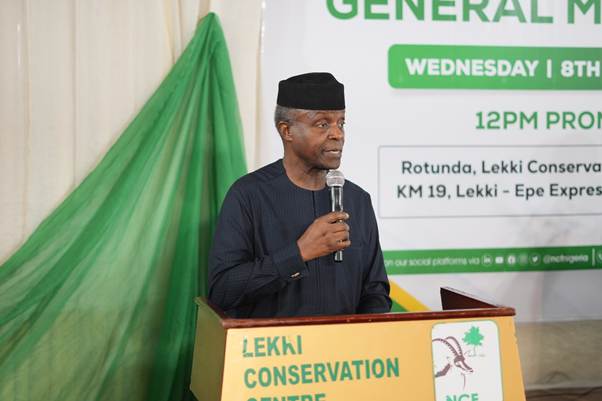
The Annual General Meeting also marked the beginning of a new chapter with the appointment of Professor Yemi Osinbajo, SAN, GCON, as President of the Board of Trustees.
A Senior Advocate of Nigeria and former Vice President of the Federal Republic of Nigeria, Professor Osinbajo brings extensive experience in governance, climate leadership, sustainable development, and public policy. During his tenure in public office, he led the development of Nigeria’s Energy Transition Plan, championed initiatives that integrated environmental sustainability into national development, and supported programmes promoting climate resilience, renewable energy, and natural resource stewardship.
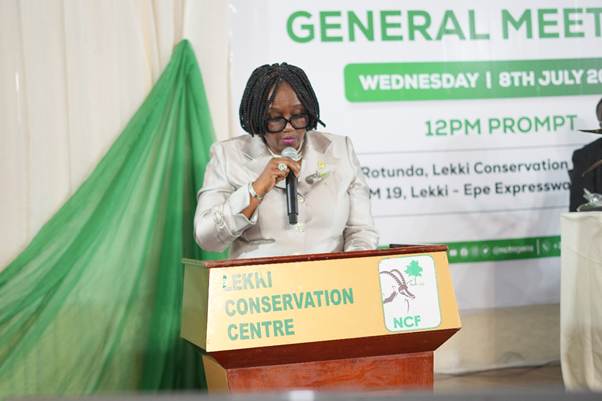
Welcoming the new President, the Chairman of the National Executive Council, Honourable Justice (Mrs.) R.I.B. Adebiyi, described the appointment as an important milestone in the Foundation’s evolution.
She noted that Professor Osinbajo’s leadership experience, commitment to climate action, and understanding of sustainable development would further strengthen NCF’s engagement with government, development partners, the private sector, and communities as the Foundation scales its conservation impact across Nigeria.
Governance, Accountability and Strategic Leadership
Throughout the meeting, speakers reaffirmed that effective conservation extends beyond field implementation to encompass sound governance, institutional resilience, evidence-based advocacy, and long-term strategic thinking.
Chief Asiodu highlighted the importance of collective responsibility in addressing Nigeria’s environmental challenges, while emphasising the growing relevance of ecosystem restoration, partnerships, and nature-based solutions in building resilient communities.
In her report on behalf of the National Executive Council, Justice Adebiyi underscored the Foundation’s role in shaping environmental policy, strengthening institutional governance, and fostering collaboration across government, civil society, academia, communities, and the private sector. She also noted that as global attention increasingly turns toward biodiversity, climate finance, and ecosystem restoration, Nigeria has an opportunity to leverage these emerging trends to advance sustainable development while protecting its natural heritage.
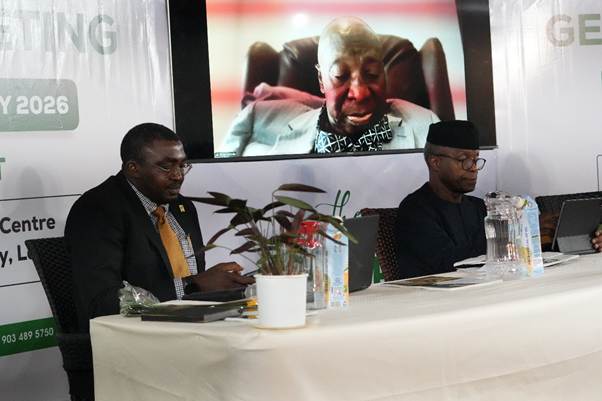
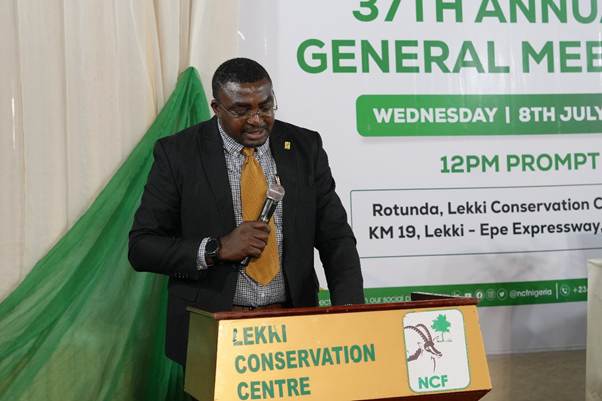
Presenting the Director-General’s Report, Dr. Joseph Onoja reflected on a year characterised by delivery under pressure, expanding partnerships, and measurable impact. He reaffirmed the Foundation’s commitment to scaling ecosystem restoration, strengthening community-led conservation, investing in environmental education, and delivering integrated solutions that improve both ecological integrity and human well-being.
Positioning for the Future
The 37th Annual General Meeting also marked the conclusion of one strategic chapter and the beginning of another.
Following an extensive institutional review, the Foundation has completed the development of its 2026–2030 Strategic Direction, providing a renewed framework for responding to increasingly complex environmental challenges.
Built around four interconnected priorities namely Climate Change, Biodiversity Conservation, Pollution Management, and Institutional Strengthening, the strategy reflects NCF’s ambition to deepen conservation impact, strengthen partnerships, expand innovation, mobilise sustainable financing, and reinforce its position as a leading voice for environmental stewardship in Africa.
Guided by a renewed vision of creating sustainable societies where people and nature thrive together, the strategy seeks to integrate conservation more closely with national development, community resilience, and long-term prosperity.
Charting The Next Chapter
As the meeting concluded, one message resonated throughout the proceedings: conservation has never been more important to Nigeria’s future.
The environmental challenges confronting the nation remain significant, but so too are the opportunities to build resilient landscapes, restore ecosystems, strengthen livelihoods, and inspire a new generation of environmental leaders. Achieving these outcomes will require bold leadership, stronger partnerships, sustained investment, and collective action across every sector of society.
With a renewed strategic direction, measurable conservation impact, and a historic transition in leadership, the Nigerian Conservation Foundation enters its next chapter with confidence building on nearly four decades of service while remaining steadfast in its mission to protect Nigeria’s natural heritage for present and future generations.