How NCF is equipping women and other community members with practical skills to transform Nypa palm fibres into marketable products while advancing more sustainable coastal livelihoods.
For many communities along Nigeria’s Niger Delta, the Nypa palm presents a difficult environmental challenge. Introduced to the region decades ago, the invasive plant has spread across parts of the coastline, competing with native mangroves for space and threatening the ecological balance of these important coastal ecosystems.
Yet, amid this challenge lies an opportunity to rethink how communities relate to the plant and the resources around them. What if a species widely regarded as a threat could also become a source of income? What if the people living with its spread could acquire the skills to turn its fibres into useful products and build new livelihood opportunities in the process?
These questions informed an intervention by the Nigerian Conservation Foundation (NCF), with support from the Ford Foundation, under the project Catalysing Local Action for Climate Justice in Nigeria. Through practical training in Nypa palm value addition, the initiative is helping community members explore ways to convert the plant’s fibres into marketable products, while strengthening their capacity to pursue more sustainable livelihoods.
Turning an Environmental Challenge into an Economic Opportunity
In communities such as Ogulagha, Burutu LGA in Delta State, Nypa palm is part of the coastal environment that residents navigate daily. Its spread has raised concerns about the pressure it places on native mangrove vegetation and the wider ecosystems that sustain fishing and other coastal livelihoods.
Addressing the challenge requires more than raising awareness about the plant’s environmental effects. It also calls for practical approaches that recognise the economic realities of the people who depend on these landscapes.
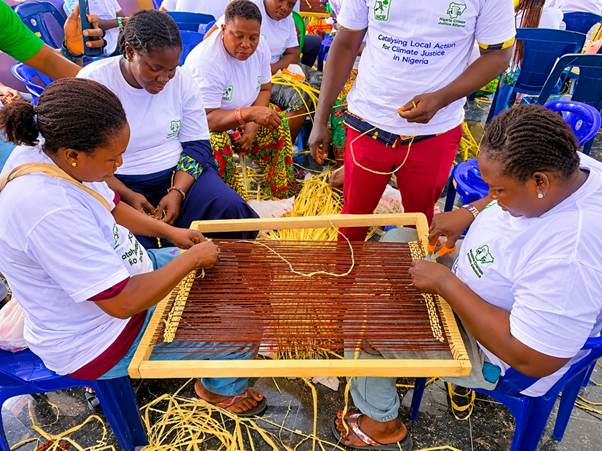
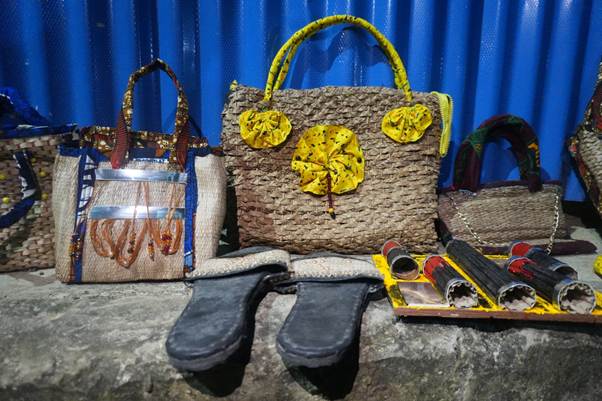
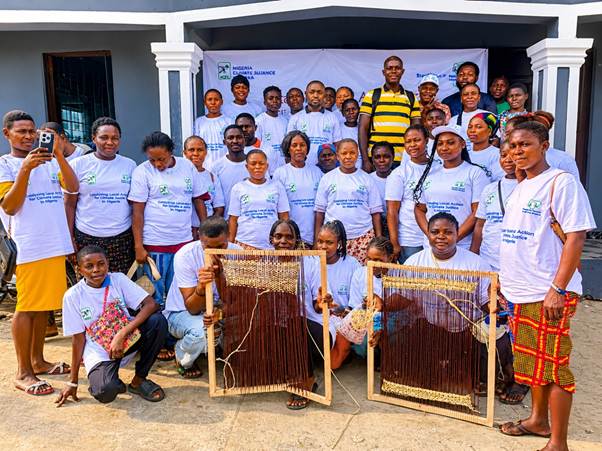
NCF’s response included training 100 participants, with 50 drawn from each of the two communities, in the use of Nypa palm fibres to produce items such as bags, baskets, flower vases, book covers and other household and decorative products.
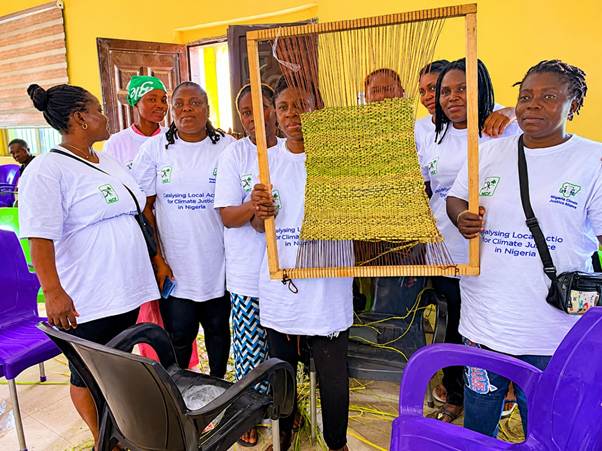
Participants received practical instruction in processing the fibres and developing finished products. The intervention also provided tools and starter materials, alongside financial support and basic business and marketing guidance to help participants begin applying their newly acquired skills.
The approach connects conservation with livelihood development. By exploring the economic potential of Nypa palm, community members can develop additional income-generating skills while engaging with an environmental challenge that affects their surroundings.
Learning a Skill, Finding a Market
For Dobra Ogolobori of Ogulagha community, the training offered an opportunity to learn something she could put to use beyond the sessions.
She recalls learning how to work with the materials and turn them into different products, including household items and slippers. More importantly, she began making and selling some of the products after the training. “After the training, I started making money from the products. People buy them and even come to learn from me. I use the money from the sales to support my husband and my family,” she shared.
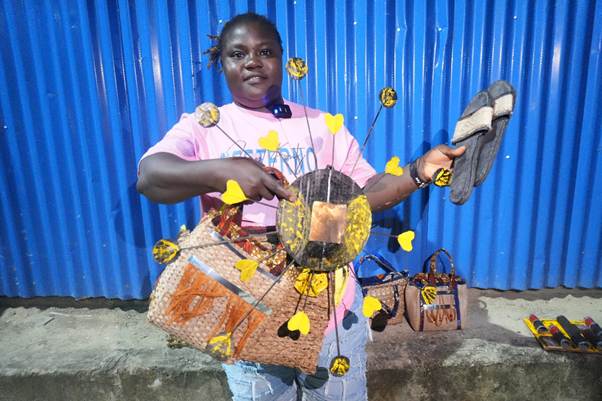
Dobra Ogolobori and some of her crafts
Her experience illustrates an important dimension of livelihood empowerment: the value of training lies not only in the knowledge transferred, but also in whether participants can apply that knowledge and identify opportunities to earn from it.
Dobra’s account also points to the possibility of skills spreading beyond the original group of trainees. As people see the products and become interested in learning how to make them, participants can become informal knowledge-sharing points within their communities.
For her, the intervention has provided more than a new craft. It has introduced an additional way to contribute to household needs.
Beyond Individual Skills: Strengthening Household Livelihoods
The benefits of livelihood training can extend beyond the person who attends a workshop. In households where income is often dependent on fishing and other coastal activities, additional skills can provide another source of support, particularly when existing livelihood activities are affected by changing environmental and economic conditions.
Ogolonpitan Npapa, Financial Secretary of Ogulagha community, expressed appreciation for the opportunity provided to women, men and young people. He noted with enthusiasm the impact the training made on his wife, “My wife participated in the training and learnt how to make these products. Today, people from neighbouring communities come to buy what she makes, and she can now help me with the family’s responsibilities.”
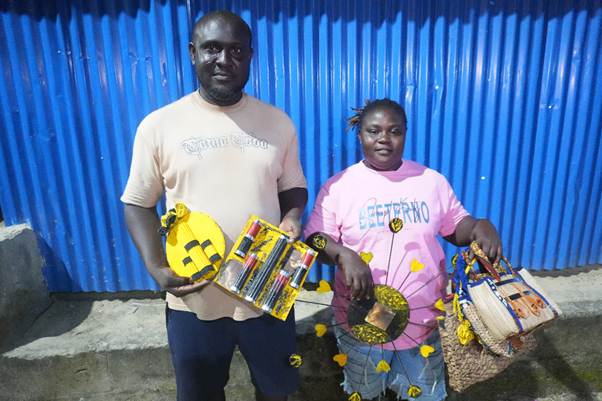
Ogolonpitan Npapa proudly shows off the wares of his spouse
Raymond Blessing, another beneficiary, also spoke about learning to make bags that were previously unfamiliar in the local market. “We learnt how to make bags and sell them. Before now, we had not made this kind of bag here, but people are already buying them.”
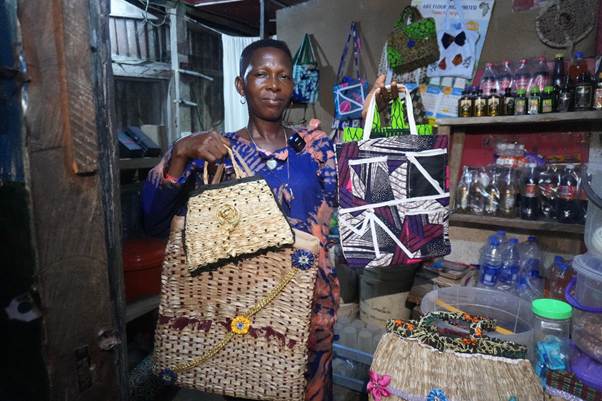
Raymond Blessing displaying some of her crafts at her shop
These accounts offer an early indication of how practical skills development can open up livelihood possibilities within and beyond the immediate training communities. They also reinforce the importance of ensuring that participants have access to the materials, tools and basic business knowledge needed to move from production to sales.
Building the Foundations for a Sustainable Livelihood
For Nypa palm value addition to become a viable livelihood option, the training must translate into continued production, reliable access to materials and markets, and the capacity to manage the small businesses that may emerge.
This is why the intervention went beyond practical demonstrations. The provision of tools and starter materials, financial support and basic business and marketing guidance was intended to help participants take the next steps towards applying their skills.
However, the longer-term potential of the initiative will depend on factors such as consistent product quality, market demand, access to buyers and the ability of participants to sustain production. The experiences shared by beneficiaries provide encouraging early signs, but continued support and market connections will be important in helping these opportunities grow.
The value of this intervention, therefore, lies in its contribution to a broader approach: addressing environmental challenges while recognising the livelihood needs and capacities of the communities most affected by them.
Putting People at the Centre of Coastal Resilience
The Nypa palm training reflects a central principle of NCF’s climate justice work: communities must have meaningful opportunities to participate in shaping solutions to the environmental challenges around them.
For the women and other participants who took part, the training has created an opportunity to acquire practical skills, develop products and explore additional sources of income. For their households, these skills may provide another means of meeting everyday needs. And for the wider communities, they offer a starting point for thinking differently about how local resources can be used.
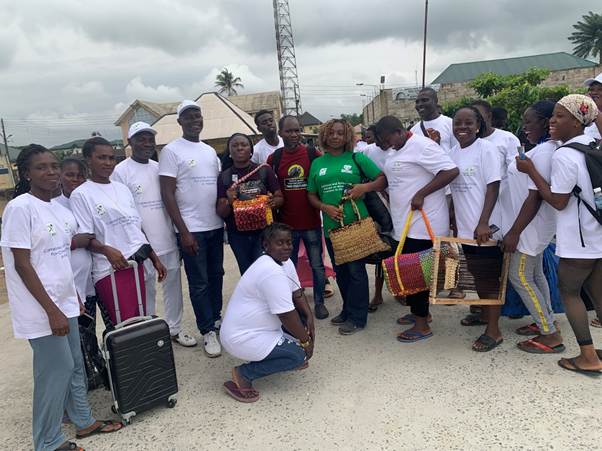
Coastal resilience is strengthened when environmental action is connected to the realities of people’s lives. It requires protecting ecosystems, but also supporting the knowledge, skills and economic opportunities that enable communities to participate in that protection.
By turning Nypa palm fibres into products with potential market value, NCF and its community partners are helping to explore one such connection: where livelihood empowerment and environmental responsibility can begin to work alongside each other. The journey from training to a sustainable enterprise is still unfolding. But for participants like Dobra, the first steps have already been taken: a new skill acquired, products made, customers found and another opportunity to support the family created.