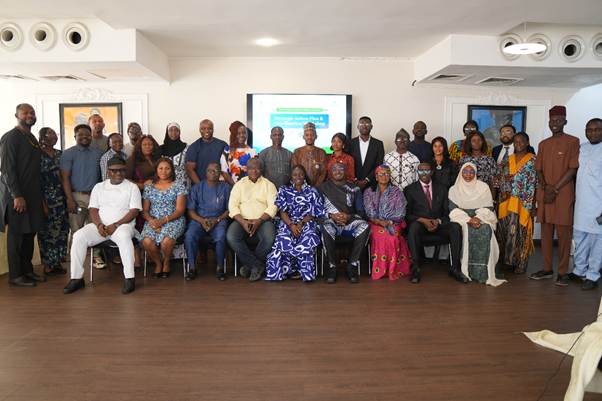
The Nigeria Climate Justice Alliance (NCJA), a coalition of civil society organisations, community groups, youth movements, researchers, and media actors, convened a two-day Strategic Action Plan Review and Coordination Workshop from 16th to 17th February 2026 in Abuja. Bringing together members from across the country, the workshop focused on strengthening climate justice in Nigeria through improved coordination, strategic planning, and community-centred action.
Setting the Stage for Collective Climate Action
The workshop opened with a Prayer of the Earth, followed by the national anthem and participant introductions. In his opening remarks, Dr. Joseph Onoja, Director General of the Nigerian Conservation Foundation (NCF), outlined the objectives and expected outcomes of the workshop, emphasizing the urgent need for cohesive, coordinated, and justice-driven climate action.

The keynote address, delivered by Dr. Eugene Itua, CEO of Natural Eco Capital, posed the critical question: “Climate Justice: Where is Nigeria on the Global Map?” Dr. Itua highlighted Nigeria’s vulnerabilities to climate change, particularly the disproportionate impacts on frontline communities, women, and youth. Participants were reminded that while these communities often engage in livelihood practices such as deforestation out of necessity, these actions can inadvertently worsen climate risks creating a cycle of heightened vulnerability.
Reviewing the NCJA Strategic Plan and Governance Structure
A key feature of the workshop was the detailed review of the NCJA Strategic Plan (2026–2030), presented by Mr. Adedamola Ogunsesan, Director of Technical Programmes at NCF. Discussions focused on thematic areas, priority actions, and expected outcomes, as participants collectively identified the strategic pathways necessary to address Nigeria’s climate crisis.
The coalition also reviewed its governance structure, including coordination mechanisms, membership criteria, and the establishment of functional working committees. Four committees were formed to drive the Alliance’s work:
- Public Advocacy & Change
- Resource Mobilization
- Knowledge & Capacity Building
- Coordination/Secretariat
Each committee was tasked with mapping roles, responsibilities, and accountability mechanisms, ensuring that every member’s contribution advances the shared goal of community-led climate solutions.
Day Two: Roadmaps, Partnerships, and Strategic Commitments
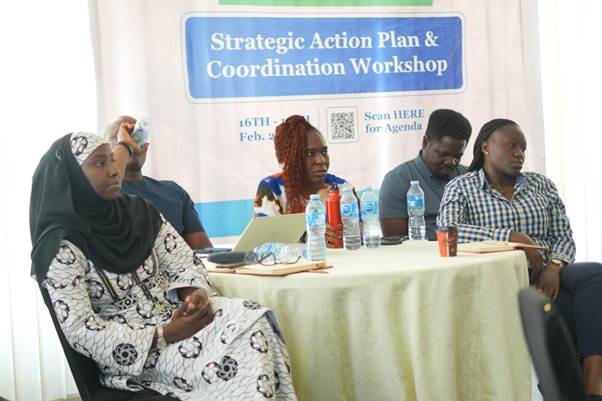
The second day of the workshop built on the foundation laid on Day One. Participants engaged in roles and responsibilities mapping, identifying thematic leads and clarifying member contributions. This session strengthened the Alliance’s coordination and highlighted the critical need for civil society climate coordination to amplify influence on policy and access to climate finance.
Discussions on resource mobilization and strategic partnerships emphasized joint fundraising approaches, engagement with donors and government, and leveraging the collective strength of member organizations. These deliberations culminated in the development of the NCJA Action Roadmap, detailing short-, medium-, and long-term actions, timelines, responsibilities, and deliverables.
Key Observations and Resolutions
Workshop participants underscored the social and economic inequalities exacerbated by climate change in Nigeria. They recognized that achieving climate justice requires integrating gender inclusivity and ensuring that people with disabilities are not left behind.
Key resolutions from the workshop included:
- Reaffirming commitment to the NCJA Strategic Plan 2026–2030 as the guiding framework for collective climate action.
- Strengthening governance, coordination structures, and accountability mechanisms across the Alliance.
- Implementing the working committees to focus on advocacy, resource mobilization, knowledge sharing, and coordination.
- Scaling up coordinated advocacy to influence climate policies and amplify community voices.
- Pursuing joint resource mobilization and strategic partnerships to support community-driven climate solutions.
The Alliance also committed to actionable timelines on all roadmaps and follow-up mechanisms, reinforcing accountability and sustained impact.
Commitment to Inclusive and People-Centred Climate Action
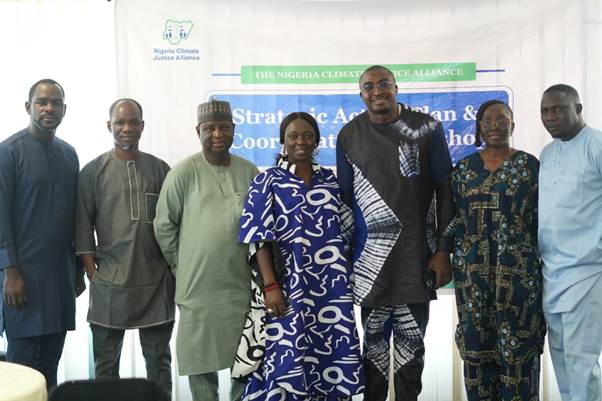
In closing, NCJA members reaffirmed their dedication to advancing climate justice in Nigeria by centering community voices, protecting ecosystems, promoting equity, and holding duty-bearers accountable. Participants called on government institutions, development partners, the private sector, and the media to support inclusive, transparent, and people-centred climate action in the country.
The Abuja workshop marks a critical step in Nigeria’s collective climate journey, emphasizing that civil society coordination, strategic planning, and community-led solutions are essential for meaningful climate action. By leveraging the strength of the coalition, the NCJA is well-positioned to ensure that vulnerable communities are not only protected but empowered to actively participate in shaping Nigeria’s climate future.